
Charting a Cleaner Course:
Port Freeport’s Continuous Improvement
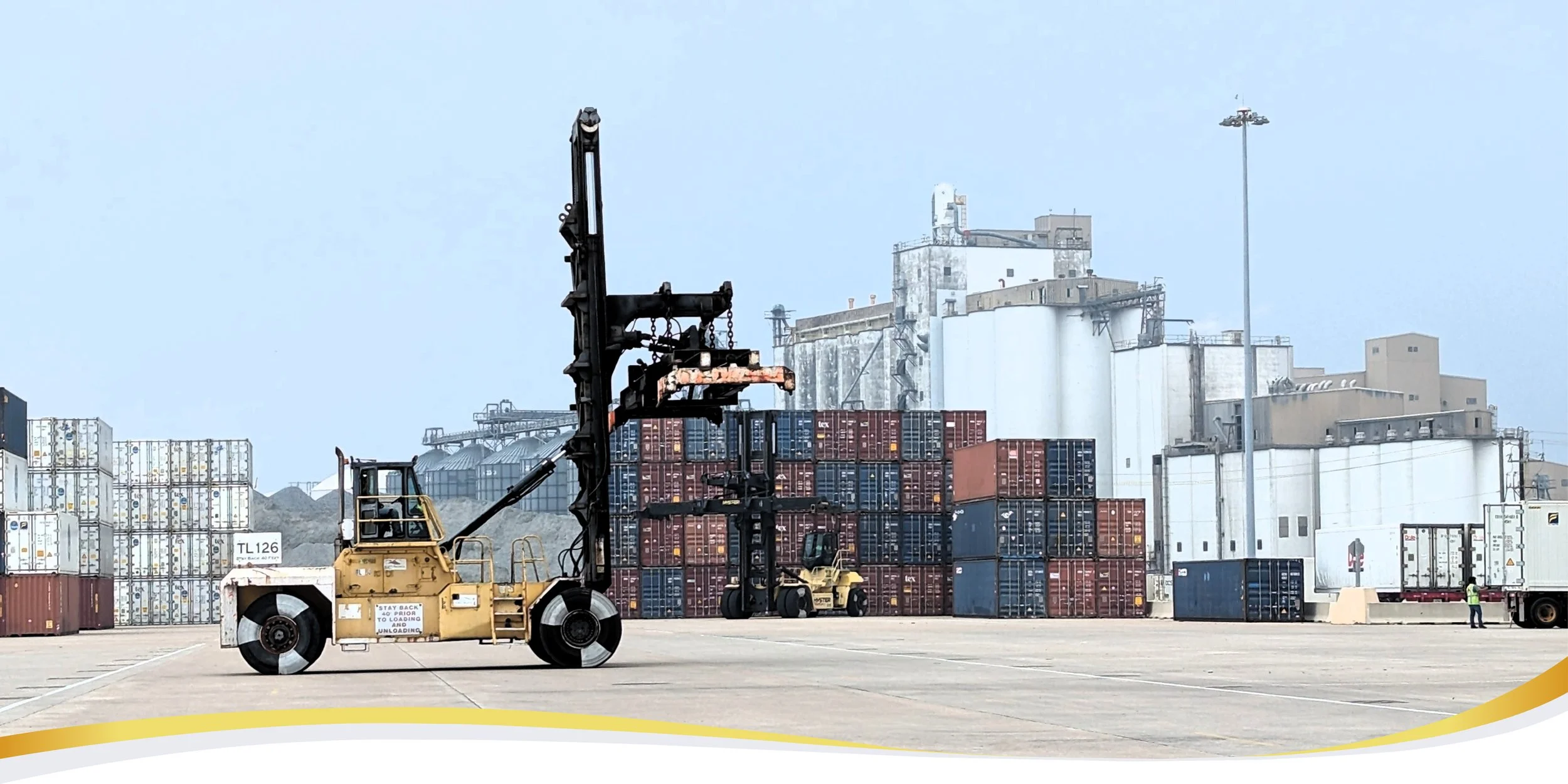
Port Freeport (“the Port”) plans to build a foundation to transition to Zero Emissions (ZE) operations, positioning the Port to serve as a catalyst for transformational change across local freight operations and reduce mobile source pollution in near-port communities. This aligns with the purpose of the 2024 Clean Ports Program, best stated by EPA Administrator Michael S. Regan: “Our nation’s ports are among the busiest in the world, helping us to create good jobs here in America, move goods, and grow our economy… we’re making $3 billion available to install cleaner and more efficient technologies while cutting air pollution to protect the people who work at and live near ports.”
The Port has determined the appropriate approach to its transition to ZE operations consists of four phases designed to identify existing equipment and emissions, formulate plans to address its risks and strategies, engage stakeholders, and develop the plan for deployment. The Port therefore requests to execute the following sequence of plans and analyses in alignment with the stated project approach:
1. Inventory of Port Equipment and Emissions Monitoring.
2. Resiliency Planning.
3. Community Benefits and Workforce Plan.
4. Electrical Feasibility Scenario Analysis.
Overall Project Description:




Inventory of Port Equipment and Emissions Monitoring
1.
To build the foundation the Port proposes to complete an inventory of all equipment used for emissions monitoring within the organization. This inventory will facilitate the assessment of the condition, functionality, age, fuel type, engine tier, and calibration status of each piece of equipment. This will result in a centralized database or inventory system to track and manage impacts from emission reduction efforts. The inventory consists of 10 tasks with ongoing monitoring updates.
Description:
Brazoria County, Freeport, Texas
Location:
Timeline:

Project Start Date: July 20, 2026
Project End Date: February 12, 2027
Resiliency Planning
2.
Port resiliency planning is a crucial area of focus for ensuring long-term sustainability and functionality of the Port in the face of environmental challenges. The Port requests planning funding to develop a plan to continue resiliency through natural disasters in the context of climate change. This consists of four tasks with ongoing community and stakeholder engagement.
Description:
Community Benefits and Workforce Plan
3.
Timeline:
The Port aims to develop a comprehensive near-port community benefits and workforce plan to expand on current efforts by the Community Advisory Panel (C.A.P.). These efforts will enhance the socioeconomic well-being of the community while supporting the future workforce development needs of industry. This plan will focus on creating valuable engagement to drive economic growth through strategic partnerships and initiatives. The approach to create a Community Benefits and Workforce Plan will align with EPA’s Community-Port Collaboration initiatives. This effort consists of five tasks with ongoing communication and monitoring.
Description:
Electrical Feasibility Scenario Analysis
4.
To implement ZE equipment the Port must analyze the electrical feasibility to be able to charge the proposed equipment. Conducting an Electrical Feasibility Scenario Analysis is essential to ensure the safety, reliability, and efficiency of electrical systems when implementing new electrical equipment. This analysis will reduce the risks and costs associated with equipment and electrical failures. This analysis consists of five tasks with ongoing stakeholder engagement.
Description:
Timeline:
Project Start Date: July 20, 2026
Project End Date: May 14,2027
Project Start Date: July 20, 2026
Project End Date: April 9, 2027
Timeline:
Project Start Date: July 20, 2026
Project End Date: March 12, 2027
The Port Freeport received financial support from the EPA under a Clean Ports Program Assistance Agreement.